

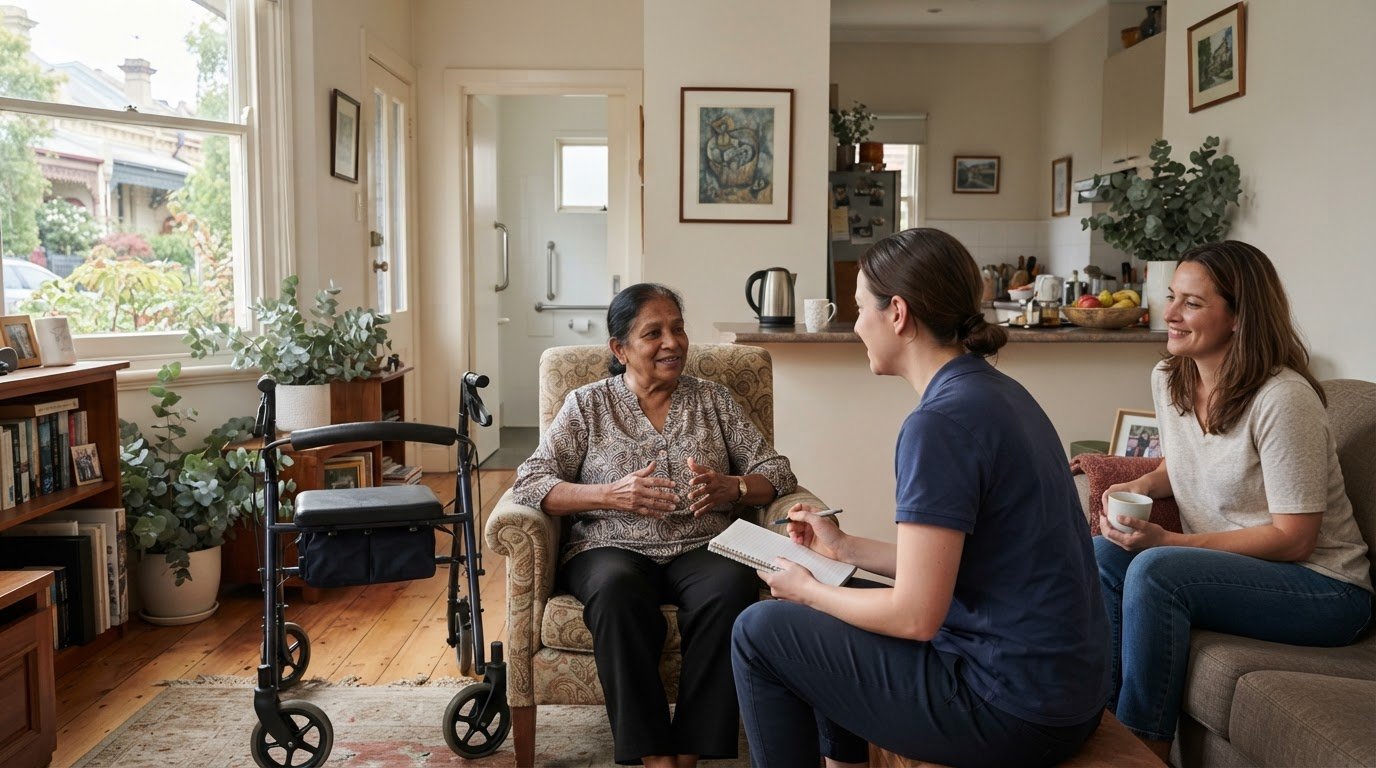
What if the most helpful preparation for an occupational therapy home assessment is to leave things as they are? If you’re wondering how to prepare for an ot assessment at home, you don’t need to create a perfectly tidy or staged space. The OT needs to understand what everyday life is really like, including the routines, spaces and tasks that feel difficult.
It’s understandable to feel unsure about what information to gather or how to explain your challenges. You might also worry that your home will be judged. The visit is a chance to share what matters to you, not to pass an inspection. Your goals and daily experiences can help shape a more personal assessment.
This guide covers what you may want to have ready, how to describe the activities you’d like support with, and what the OT may look at during the visit. You’ll also find questions to ask and an overview of possible next steps. A little preparation can help you feel more at ease without turning the day into another task to manage.
Key Takeaways
- Use your own goals and daily activities to guide what you share with the OT.
- Make brief notes about current supports, equipment, routines and recent changes. Gather reports only if they’re readily available.
- You can prepare for an OT assessment at home without making the visit a stressful task.
- You can ask for a break, clarification or a different pace during the visit.
- After the assessment, ask what each recommendation is intended to support and what options may be considered.
Home OT Assessment Prep: Start With Your Goals
Feeling unsure before an occupational therapy home visit is understandable. You may be wondering what to say or whether you’ll be asked to demonstrate everyday tasks. A helpful starting point is to think about what matters most to the person, rather than trying to give the “right” answers.
The assessment is a conversation about daily activities, personal goals, abilities and the home environment. Occupational therapy looks at how a person’s needs and surroundings can affect participation in everyday life. If you’re new to the profession, read this Occupational therapy overview or explore this guide to occupational therapy and independence.
What does an OT home assessment help the therapist understand?
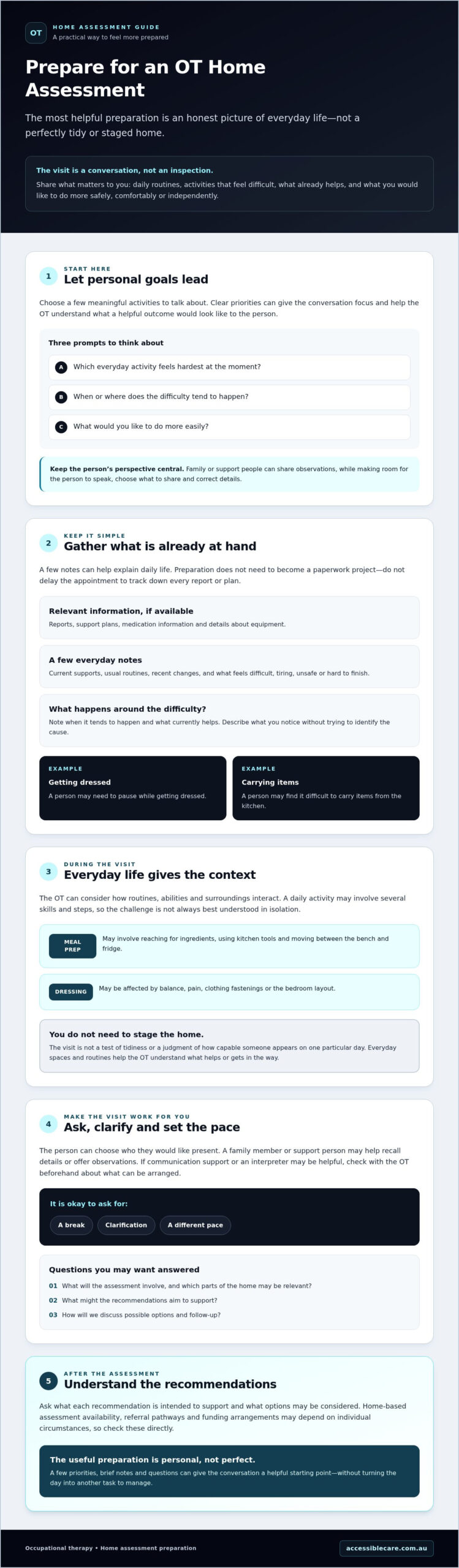
Everyday tasks can involve several skills and steps. Preparing a meal might mean reaching for ingredients, using kitchen tools and moving between the bench and fridge. Dressing may be harder because of balance, pain, clothing fastenings or the bedroom layout. The OT can consider how routines, abilities and surroundings interact instead of looking at a challenge in isolation.
The visit isn’t a test of how tidy the home is or how capable someone appears on one particular day. Its purpose is to build a clearer picture of what helps or gets in the way in daily life. The person can explain what feels difficult, what they already do to manage and what they’d like the therapist to understand.
Which goals should you think about before the visit?
Start by asking the person: What would you like to do more safely, comfortably or independently? Choose a few meaningful activities to discuss. Trying to cover every concern can feel overwhelming, while clear priorities give the conversation a useful focus. They also help the OT understand what a helpful outcome would look like to the person.
If it helps, jot down a few prompts before the visit:
- Which everyday activity feels hardest at the moment?
- When or where does the difficulty tend to happen?
- What would you like to be able to do more easily?
Family members or support people can add observations, such as noticing that moving between rooms takes more effort. Keep the person’s own perspective central, though. They can lead the conversation, choose what to share and correct details that don’t reflect their experience. These priorities are a practical first step in preparing for the assessment.
What to Gather Before an OT Assessment at Home
A few notes can help you explain what daily life is like, but preparation doesn’t need to become a paperwork project. Gather relevant information that’s easy to find, and don’t delay the appointment to track down every report or plan. Often, the most useful details are the person’s own examples of what they want to do and what currently makes it harder.
Which documents and everyday examples are useful to have nearby?
If available, keep relevant reports, support plans, medication information and details about equipment nearby. You could also note current supports, usual routines and recent changes that relate to the person’s goals. These details may help the OT understand the broader context, but there’s no need to create a complete file before the visit.
Everyday examples can make it easier to talk about a concern. Note what feels difficult, tiring, unsafe or hard to finish, when it tends to happen, and what currently helps. For instance, a person might need to pause while getting dressed or find it difficult to carry items from the kitchen. Describe what you notice without trying to identify the cause. This practical information helps shape a person-centred conversation, much like the occupational therapy evaluation process considers a person’s activities and how they manage them.
You may also want to bring a short list of questions:
- What will the assessment involve, and which parts of the home may be relevant?
- What might the recommendations aim to support?
- How will we discuss possible options and follow-up?
Who should be involved in the home visit?
Ask the person who they’d like to have present. A family member or support person may help recall details or offer observations, while making space for the person to speak for themselves. If an interpreter or other communication support may be helpful, check with the OT beforehand to discuss what can be arranged.
Keep your preparation simple. A few notes, relevant information that’s already at hand and questions you want answered are enough to give the conversation a useful starting point. If you’re exploring how to prepare for an ot assessment at home and want to understand what support may suit your circumstances, you can ask Accessible Care about occupational therapy support options. Home-based assessment availability, referral pathways and funding arrangements may depend on individual circumstances, so check these directly.
Do You Need to Tidy Before an OT Home Assessment?
No. You don’t need to make the home spotless or stage it for the visit. An ordinary home can help the OT understand how the person moves through familiar spaces, reaches for everyday items and manages tasks as they usually happen. The visit isn’t a judgement of housekeeping. It’s a chance to show what supports the person and what may be getting in the way.
There’s a difference between making the visit comfortable and hiding everyday challenges. If something creates an immediate hazard for anyone present, you can address it, but don’t take on a big clean or rearrange rooms to impress the therapist. A home safety resource such as the AOTA Safe at Home Checklist can give you an idea of the access and safety details an OT may discuss.
What should you leave as it normally is?
Keep commonly used items and usual task setups in their regular places. If the person’s goal involves making a drink, getting dressed or moving around a particular room, the familiar layout can help explain where difficulties arise. There’s no need to recreate a task or demonstrate anything that feels uncomfortable. Let the OT know what the person normally does and discuss whether showing an activity feels right for them.
Try not to move equipment, shift furniture or change routines just for the assessment. If something has been moved for a practical reason, simply explain the usual arrangement. The aim isn’t to present a perfect space. It’s to help the OT understand the person’s everyday environment in context.
How can you make the visit comfortable and accessible?
If possible, arrange a time when the person is usually most comfortable and able to take part. Before the visit, let the OT know about access needs, communication preferences, pets or other practical details that could affect the conversation. You can then discuss what may help the person feel at ease.
A quiet place to talk can be useful, while keeping relevant everyday areas available to discuss if they relate to the person’s goals. There’s no need to prepare every room. Focus on comfort and access, and give the person space to take part at a pace that works for them.
What Happens During an OT Assessment at Home?
An OT home assessment is usually a flexible conversation shaped around the person, not a fixed set of tasks to complete. The OT may ask about goals and routines, then discuss parts of the home that relate to those priorities. What the visit includes depends on the person’s needs, so don’t assume there will be a particular test, a set visit length or a room-by-room review.
The person’s goals and everyday activities guide the discussion, so the assessment can focus on what matters most to them. They can ask questions, request clarification, take a break or ask to slow the pace at any point. If something feels uncomfortable, say so. Sharing a concern is useful information too.
How can you share concerns if the day does not go to plan?
Pain, fatigue, anxiety or an unexpected change in routine can affect how someone feels during the visit. Let the OT know what has changed. The person doesn’t have to perform every task on demand, and one difficult day doesn’t have to define their usual abilities.
There are other ways to explain a task. The person might describe what happens, talk through the steps or give an example from another day. For instance, they could explain that getting ready is harder when they’re tired, even if they don’t want to demonstrate dressing during the visit. Ask the OT whether another approach would help them understand the situation.
What if the assessment is for a child?
A child’s comfort and communication matter. Caregivers can share observations about routines, interests and challenging situations, while giving the child time and space to participate in a way that feels manageable. A child may engage differently on the day than they do at home or during familiar routines. That isn’t a pass-or-fail result.
Before the visit, ask the OT what may help the child feel settled. You could discuss familiar activities, useful ways to communicate or whether the child may benefit from knowing what to expect. During the assessment, follow the child’s cues and share what you notice. The OT can consider those observations alongside the child’s responses and the family’s priorities.
For adults and children, the visit is a chance to build understanding together. Honest communication is more useful than trying to make everything go to plan. To discuss occupational therapy support for your circumstances, contact Accessible Care about OT services and ask what options may be suitable.
After the Home Visit: Discuss Recommendations and Next Steps
There may not be one standard outcome after an OT home visit. Recommendations and next steps depend on the person’s priorities, needs and what the assessment has shown. Some suggestions may relate to daily activities or routines; other situations may call for more information or further discussion. Ask the OT to connect each recommendation to the person’s goals so it’s clear what it is intended to support.
What questions can you ask about the OT’s recommendations?
It’s fine to ask the OT to explain a suggestion in plain language, including any unfamiliar terms. You might ask:
- Which of the person’s goals does this recommendation relate to?
- What practical action, if any, should we take at home?
- Is the next step more information, another appointment or a referral?
- Who will follow up, and how will we know what happens next?
If a recommendation doesn’t feel suitable, say so and ask whether other options can be considered. Understanding the purpose behind a suggestion can help the person and their supports make informed decisions, rather than feeling they need to agree straight away.
How can NDIS participants clarify funding and service arrangements?
Assessment findings don’t guarantee that a particular service, item or home modification will be funded. If the person is an NDIS participant, check their current plan details and discuss funding questions with the relevant NDIS contact. The OT may be able to explain the purpose of a recommendation, while the relevant contact can help clarify plan or funding questions. For a broader introduction, see this guide to the NDIS.
Before finishing the conversation, make sure you understand who is responsible for each follow-up action and whether you need to provide or request anything. If you’re unsure, ask the OT whom to contact and what to clarify. Knowing what happens next can make the steps after the visit feel more manageable.
Accessible Care provides occupational therapy for adults and children in Melbourne and Adelaide. If you’d like to discuss OT support, contact Accessible Care to ask what options may suit your circumstances, including whether a home-based assessment is available for your needs and location.
Take the Next Step With Confidence
Preparing for an OT home visit doesn’t mean having every answer or making the home look perfect. The most helpful approach to how to prepare for an ot assessment at home is to keep the person’s goals in focus, note a few everyday challenges and share what life is really like. After the visit, ask how recommendations connect to those goals and who can clarify follow-up or funding questions.
Occupational therapy can support adults and children to build daily living skills and independence. Accessible Care is a registered NDIS provider serving Melbourne and Adelaide. To discuss occupational therapy support and ask what options may suit your circumstances, talk with Accessible Care about occupational therapy support. Ask directly whether a home-based assessment is available for your needs and location.
You don’t need to prepare perfectly. A clear sense of what matters to the person is a thoughtful place to begin.
Frequently Asked Questions
Is an OT home assessment a test?
No. An OT home assessment is generally a conversation and observation focused on how a person’s goals, routines, abilities and surroundings fit together. It isn’t a test of housekeeping or whether someone can complete every task on demand. The person can explain what feels difficult, ask questions or request a break. If demonstrating an activity doesn’t feel right, they can describe it or share an example instead.
Should I tidy my house before an OT assessment?
No, you don’t need to make your home spotless or hide everyday challenges. The usual setup may help the OT understand how the person manages daily tasks. If there’s an immediate safety concern, address it if practical, but don’t create extra work to stage the home. If you’ve moved something, mention the change and describe what a typical day or usual setup looks like.
What should I have ready for an OT assessment at home?
Have relevant reports, plans and information about current supports or equipment nearby if they’re easy to access. A short list of goals, questions and examples of difficult daily tasks can also help the conversation. Note when a challenge happens and what currently helps. You don’t need to postpone the appointment because a document is missing. Ask the OT beforehand if they’d like any specific information.
Can a family member or support person attend an OT home assessment?
Ask the person being assessed whom they’d like to have present, then check the arrangements with the OT. A family member or support person may help recall routines and concerns, while leaving space for the person to share their own views and preferences. If an interpreter or other communication support is needed, contact the provider before the visit to ask what options may be arranged.
What happens if I or my child has a difficult day during the assessment?
Tell the OT if fatigue, discomfort, anxiety or a change in routine affects participation. You can discuss pausing, adjusting the conversation or explaining an activity instead of demonstrating it. No one needs to perform every task perfectly. A child’s comfort and participation may vary on the day, so consider asking the OT in advance what might help them feel settled and able to take part.
Do I need an NDIS plan for an OT home assessment?
Service arrangements can vary, so ask the OT or provider about the available pathway for your circumstances. If the person has an NDIS plan, check its current details and discuss funding questions with the relevant NDIS contact or plan manager. Having a plan doesn’t automatically mean a particular assessment or recommendation will be funded. Confirm arrangements before relying on a funding assumption.
How long does an OT home assessment take?
There isn’t one set duration for every home assessment. The time may depend on the person’s goals, the activities or areas to discuss, communication needs and the information available. Ask the OT or provider what to expect for your appointment. If the person may need breaks or a slower pace, mention this when arranging the visit so you can discuss what may work for them.

