


A sensory diet for autism is a planned routine of activities and supports that helps an autistic person manage sensory input throughout the day. It is tailored to their sensory patterns and may offer calming or alerting input at useful times. The aim is to support regulation and participation in everyday activities, not to follow a one-size-fits-all schedule.
Sensory needs differ from person to person and can change with the setting, task or time of day. An activity that helps one child may feel uncomfortable or overwhelming to another, so safety and the child’s responses matter. This article explains the purpose of a sensory diet, how sensory seeking, avoidance and low registration can shape it, and why activities need to be chosen and adjusted with care.
Key Takeaways
- Notice whether a child seeks, avoids or registers sensory input less readily, then use those patterns to understand what support may suit them.
- Plan sensory activities around the child’s preferences and daily demands, and adjust them when their needs or responses change.
- Watch for signs of rising distress during an activity; stop if the child’s behaviour escalates rather than pushing them to continue.
- An occupational therapist can help shape an individualised approach, with the child’s own views and caregivers’ observations informing the plan.
What is a Sensory Diet for Autism?
A sensory diet is a planned set of activities or accommodations to help an autistic person manage sensory input. An occupational therapist can tailor it to the person’s preferences, routines and environments.
Purpose of Sensory Diet Activities
These activities provide sensory input throughout the day to support a calm, alert state. For example, a movement break before a classroom task may help a child feel ready to participate. The purpose is not to make everyone respond alike, but to support regulation and engagement in meaningful activities, such as playing, learning or getting ready at home.
Choosing Activities for Sensory Preferences
Activity choices should reflect how a child responds to sensory input and what feels comfortable to them. An occupational therapist may consider the child’s preferences alongside caregiver observations, then suggest strategies such as a quiet space or movement break. The same activity will not suit everyone. A child who seeks movement may respond differently from one who finds movement overwhelming, so pay attention to their cues.
How often and for how long should activities happen? Plan them across the day, using short, frequent breaks and adjusting timing and duration to the child’s responses and daily demands.
At home, school or during therapy, a plan can use familiar activities suited to each setting. An occupational therapist may adapt the activity, timing and intensity for a busy classroom or a quieter home routine. To create and track a plan, include the child’s preferences, caregiver observations and the therapist’s input. Record activities and responses over time, then use those observations to adjust the plan.
Evidence for Sensory Diets
Evidence supports sensory-based interventions when trained therapists guide them, but that finding doesn’t establish that every sensory diet works for every autistic person. A 2021 review in the American Journal of Occupational Therapy found that sensory-based interventions improve functional participation when guided by trained therapists. This supports individualised, goal-focused planning and careful observation of how activities affect participation.
Safety and overstimulation
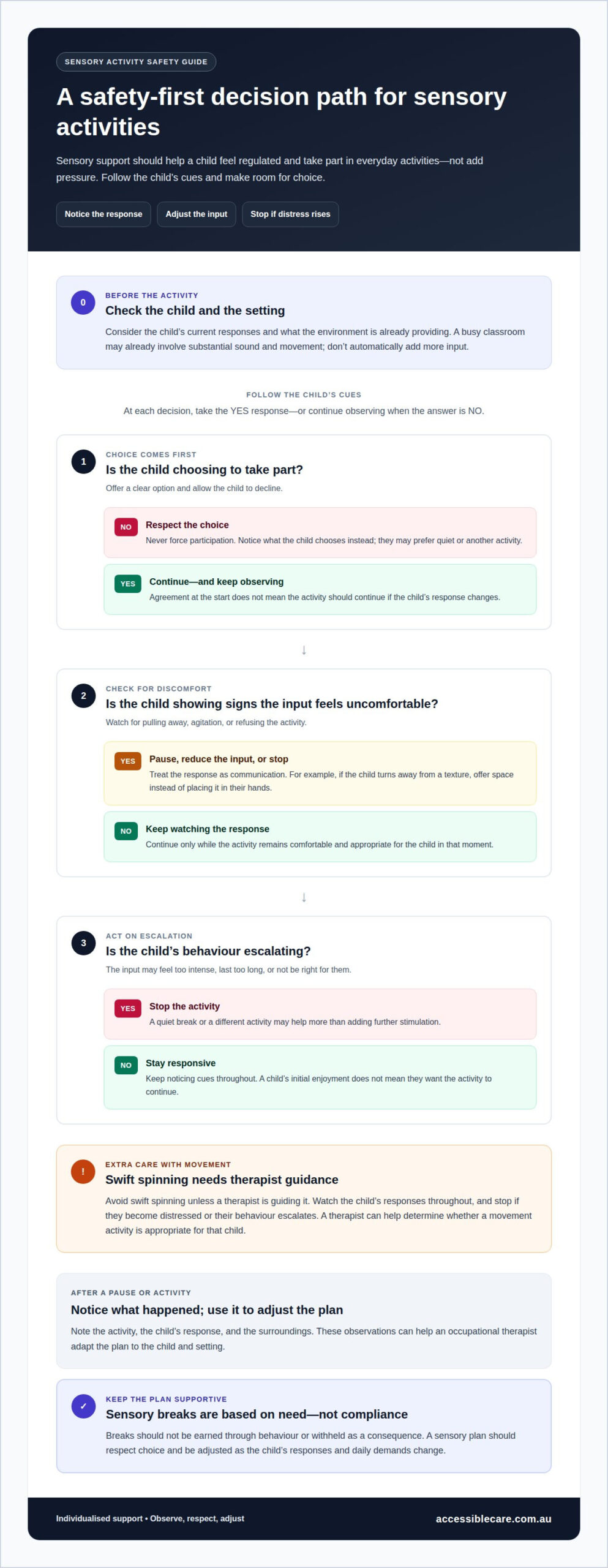
Sensory activities should support a person’s regulation, not add pressure. A child may show discomfort by pulling away, becoming agitated or refusing an activity. Treat these responses as useful communication. Pause, reduce the input or stop, rather than insisting they continue. For example, if a child turns away from a texture, offer space instead of placing it in their hands.
Stop an activity if the child’s behaviour escalates. This may mean the input feels too intense, lasts too long or is not right for them. A quiet break or a different activity may help more than adding further stimulation. Sensory breaks should respond to the child’s needs, not be earned through behaviour or withheld as a consequence.
Some movement activities need particular care. Avoid swift spinning unless a therapist is guiding it. A child’s apparent enjoyment at first does not mean they want the activity to continue. Watch their responses throughout, and stop if they become distressed or their behaviour escalates. A therapist can help determine whether a movement activity is appropriate for that child.
Safety also means respecting choice. Never force a child to take part in a sensory activity. Offer a clear option, allow them to decline, and notice what they choose instead. For instance, if a child refuses a movement break, they may prefer quiet or another activity. A sensory plan should make room for these choices rather than treat participation as compliance.
Before an activity, consider the setting and the child’s current responses. A busy classroom may already provide substantial sound and movement, while home may feel quieter. Avoid adding more input automatically. If distress rises, pause and note what happened, including the activity and surroundings. These observations can help an occupational therapist adjust the plan. For support with sensory safety planning, explore individualised sensory support.
Sensory diet definition and purpose
A sensory diet is a planned routine of activities and accommodations that provides sensory input throughout the day. The name does not refer to food. It describes a personalised approach to supporting sensory regulation, such as scheduling a movement break before a demanding classroom activity or offering a quieter space after noisy group play.
Occupational therapists Wilbarger and Wilbarger first created the sensory diet in 1991. Today, a plan may be set out as a timetable or as a list linking a situation with a sensory strategy. For example, a child who finds busy transitions difficult might have a familiar calming activity built into the routine before leaving home.
The purpose is to help a person maintain a calm, alert state that supports everyday participation. A child who feels more organised may find it easier to engage in play, social interaction, learning or daily tasks. A plan can also be proactive: rather than waiting for distress, it may provide suitable input before a known challenge, such as a noisy assembly or a long period of sitting.
Activities are arranged around the person’s sensory needs, not used as a fixed recipe. One child may benefit from movement before concentrating; another may need a quieter setting to manage competing sounds. The key question is whether the activity supports the person’s comfort and participation in that moment.
A sensory diet can also connect home and school routines. A visual timetable might show a quiet break after a busy classroom session, while a home routine includes a preferred activity before homework. The specific supports depend on the person and setting. As routines, sensory responses and daily demands change, the plan can be adjusted to stay relevant.
Sensory seeking, avoiding and low registration
Sensory patterns describe how a person notices and responds to input. They can vary by sense and setting, so a child might seek movement but avoid loud sounds. These patterns help explain which activities may feel useful, difficult or easy to miss.
A child who seeks sensory input may look for movement, touch or rough play. They might climb, fidget, bump into cushions or move often during seated tasks. Movement activities can support alertness and engagement for some children. The child’s preferences still matter: they may enjoy a playground swing but not a bouncing exercise ball.
Sensory avoidance can look different. A child may cover their ears in a noisy room, pull away from certain textures or leave a crowded space. For a child with sensitivities, a quieter area or predictable transition may feel more comfortable than extra sensory input. Notice the specific trigger, such as a hand dryer or scratchy clothing, rather than assuming all sounds or textures feel the same.
With low registration, a child may not respond readily to sensory cues. They might seem unaware when their name is called, miss objects in their surroundings or need extra prompts to start a task. This does not mean they are not paying attention. Observations across home, school and play can help identify when input is being missed.
Movement seeking, restlessness, rough-play seeking, limited awareness of personal space and sleep difficulties are possible signs worth recording. None of these alone determines what support a child needs. Note what happened before and after each behaviour, then consider the child’s own account alongside caregiver observations. An occupational therapist can use these details to understand the sensory profile and consider suitable strategies. For example, a child who seeks movement may benefit from planned movement opportunities, while a child who avoids noise may need support around noisy activities.
Explore support for sensory needs when you want help understanding how these patterns affect everyday participation.
Accessible Care
Accessible Care can help families connect sensory patterns with practical support for everyday participation. If sensory needs affect routines at home, learning or community activities, Occupational Therapy can help explore preferences, challenges and goals. The person’s views and caregiver observations can inform that discussion.
Depending on the person’s needs, support may also involve NDIS Support Services, Support Work, Speech Therapy or Positive Behaviour Support. These services can contribute to broader support, while Occupational Therapy is the relevant option for discussing sensory processing and daily activities. The focus remains on the person’s priorities, not a fixed routine or one-size-fits-all plan.
For guidance on support that reflects your circumstances, contact Accessible Care.
Take the Next Step at Your Pace
Understanding what a sensory diet for autism involves can help you describe supports that may suit your family. A useful next step is to consider which everyday moments feel hardest and what the autistic person says or shows they prefer. These observations can give a support conversation a clear starting point without turning sensory activities into another demand.
Accessible Care offers Occupational Therapy, NDIS Support Services and Speech Therapy. These services may be relevant when sensory needs intersect with daily activities, communication or broader support needs. A useful conversation starts with the person’s priorities and the routines they want to make more manageable.
If you’d like to discuss support options, contact Accessible Care to learn more. Each person’s needs and preferences deserve to guide what happens next.
Frequently Asked Questions
How do you know which “meals” to provide?
If you’re asking, “what is a sensory diet for autism?”, the “meals” are activities chosen around the person’s sensory preferences and responses. Notice what they seek, avoid or find regulating. For example, if a child leaves noisy spaces, a quieter option may suit them better. Record what happens before and after activities, and include the person’s views when discussing options with an occupational therapist.
What kinds of “menu” items are available on this diet?
Options can include movement, touch, sound and calming strategies. Examples include swinging, using an exercise ball, a sensory bin, a fidget toy or noise-cancelling headphones. Other possibilities include exploring textures, calm breathing exercises, massage or deep pressure. These are examples, not a required checklist. The useful “menu” depends on the person’s preferences, sensory responses and the activity they need support with.
What sensory needs or behaviours can a sensory diet address?
A plan may support sensory seeking, avoidance or low registration. Relevant observations can include frequent movement, restlessness, rough-play seeking, limited awareness of personal space or difficulty noticing sensory information. Sleep difficulties may also be part of the picture. These behaviours do not identify a specific sensory need on their own. Looking at when they happen and what surrounds them gives more useful context.
Who can assess and design a sensory diet for an autistic person in Australia?
An occupational therapist can assess sensory patterns and develop an individualised plan when appropriate. In Australia, parents, carers and school staff may share observations about everyday routines, while the autistic person’s preferences help shape the approach. For instance, notes about a difficult school transition can help the therapist consider what support suits that situation, rather than relying on a generic activity list.
What are common sensory diet activities for children and adults?
Activities may include movement, fidgeting, tactile exploration, breathing exercises or access to a quieter space. A child might use a sensory bin during play; an adult might prefer a brief movement break between tasks. Activities should not be assigned by age alone. Comfort, choice and the person’s response matter more than whether an activity is commonly associated with children or adults.
What are the risks of sensory diet activities, and what safety precautions are needed?
An activity may increase distress if its intensity or type does not suit the person. Never force participation, and stop if behaviour escalates. Avoid swift spinning unless a therapist is guiding it. Watch for signs such as pulling away or becoming agitated, and give the person space to decline. A therapist can help adjust activities to the person’s responses and circumstances.

